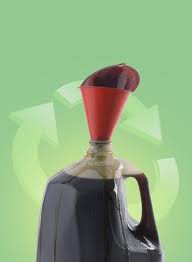
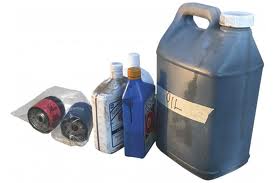
There has been more and more interest in using Waste Motor Oil as fuel. Due to the increasing scarcity of Waste Vegetable Oil, WMO is becoming a viable alternative fuel for folks with diesel vehicles and waste oil burners. Sources of WMO are:
*Car repair shops
*Auto Dealerships
*Machinery shops
*Trucking service company
*Fleets
*Construction companies
*Neighbors and friends
(Checkout our new WMO Pump - Designed to move high viscosity oils)
Most people burn WMO straight in their vehicle, without the typical Waste Veggie Conversion tanks, pumps and heaters. Straight WMO can work in vehicles, but it is typically refined before putting in the fuel tank. There are hosts of ways to refine the WMO, thinning it to the viscosity of diesel. Kerosene(K2), Regular Unleaded Gas(RUG), Ethanol(E85), Diesel(D2) and Acetone are used at varying percentages. Diesel is blended at the highest percentages, where the other additives are generally blended in the 5-15% range.
Burning in Waste Motor Oil in a Vehicle is still in the experimental stages. I mean it works; you can burn WMO and power over the mountain pass. And oh yeah, it can be very profitable, saving loads of cold hard cash at the pump. Still under investigation however is the longevity and compatibility with specific fuel systems. Many undertake "maverick" experimentation on their personal vehicles. These experiments are documented in forums, mainly in vehicle-specific forums. Marcus has good documentation for his common rail Duramax WMO experiment in this forum discussion. Here is a link our WMO Forum Discussion as well.
Using WMO in your vehicle will be an experiment and risks will greatly be reduced with finely cleaned oil. Buying a couple water filters from Home Depot isn't enough. For proper cleaning, its best to use a centrifuge or a high quality diesel particulate filter with water block. Using a WMO Centrifuge is a hassle-free and surefire way to clean up the for use as fuel. Centrifuges will remove the solid and liquid contaminants. It's important to get the WMO cleaned down to less than 10 micron rating for absolute particulates. A centrifuge will clean below one micron.
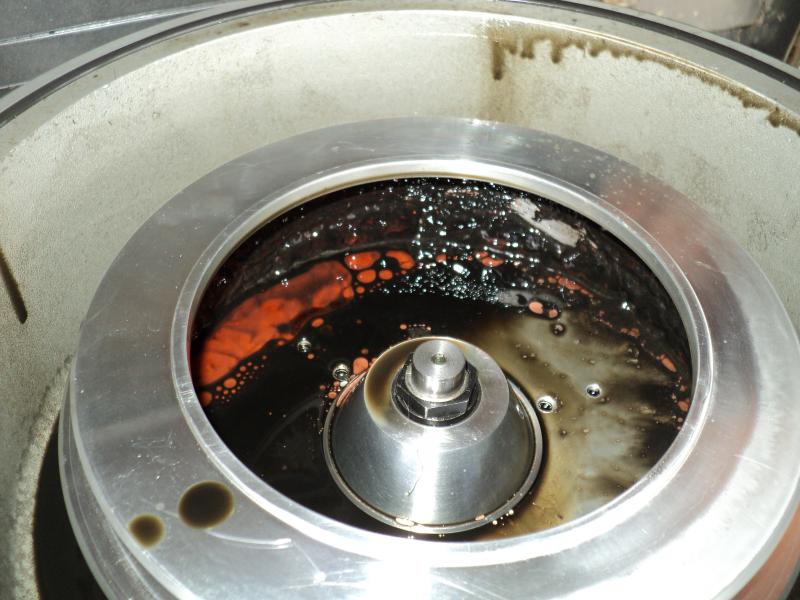
Contaminants present in WMO come from use in engines along with external storage/disposal situations. Engine-based contaminants include heavy metals(lead, copper etc), water, soot, glycol(antifreeze), fuel and metal bits from engine wear. Remember, engines constantly filter the oil, so the particulate contamination isn't as bad when sourcing straight from an engine. However, engine oil filters aren't fine enough for injection systems, most of them are 20 or 30 micron at best.
Some of the worst contamination happens when the oil is outside of the engine, sitting at the autoparts store, where folks tend to pollute with spent filter, antifreeze, and who knows what else.
Due to the varying contamination levels and the need for a fine cleaning to use as fuel, WMO is best cleaned in stages. Initial settling is paramount where good oil will rise over time, leaving water, antifreeze and heavy contaminants on the bottom. Settling times decrease when heat is applied. Most heaters will cause convection currents, mixing the oil with contaminants, so it's best to let the WMO cold settle 24-48hrs after the application of heat. Next, thinning agents or heat is added to the oil prior to centrifuging to reduce viscosity for effective cleaning. Some folks use heaters, like our Bolt on Heater to reduce the viscosity to clean 100% WMO. Blending can also be done after the the oil is clean, reducing the viscosity for proper flow and combustion in vehicles.
Once you have your clean oil and blend of choice refined, you are ready to use the oil as fuel in your vehicle or waste oil burner. Waste oil burners are more tolerant of the high viscosity, where vehicles have varying tolerances. My mechanic burns straight WMO in his 1983 Mercedes diesel, a vehicle with a robust injection pump. Other vehicles like common rail injection systems are finicky with waste oils, even blends. Some proven vehicles for WMO are pre-1987 Mercedes, pre-2002 Fords, and 89-2002 Cummins.
For more information, checkout our new WMO Ebook or check our Technical Library. If you have photos or stories to add, please email me at Jason@wvodesigns.com or contribute below. Thanks and good luck!
Jason Jelonek
WVO Designs Sales and Tech Support