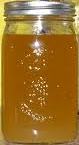

The most widely discussed and important variable with running waste oil is temperature. With the change in season comes some rather significant changes in temperature. The significant change will happen when temperatures drop below the cloud point of the vegetable oil. Cloud point is when dissolved or "melted" solids in the oil, such as wax, begin to separate from the oil and solidify. Cloud point is dependent on the type of oil. With biodiesel, cloud point will vary on the type of oil used to product the biodiesel. See the charts below as an example. The information has been gleaned from the internet from some cursory research.
| Cloud Point | Melt Point | |||
| Oil | Fahrenheit | Celsius | Fahrenheit | Celsius |
| Safflower |
64.994 |
18.33 |
- | - |
| Peanut |
55.04 |
12.8 |
37.4 |
3 |
| Sunflower |
44.96 |
7.2 |
1.4 |
-17 |
| Cottonseed |
35.06 |
1.7 |
30.2 |
-1 |
| Corn |
30.02 |
-1.1 |
-0.4 |
-18 |
| Sesame |
24.98 |
-3.9 |
1.4 |
-17 |
| Soy |
24.98 |
-3.9 |
3.2 |
-16 |
| High Oleic Safflower |
10.04 |
-12.2 |
- | - |
*data sourced from vegburner.co.uk/oils.htm
| Table 1. Cold flow properties of (B100) Biodiesel (Methyl and Ethyl Esters). (The Biodiesel Handbook). |
|||
|
|
|||
| Oil | Alkyl group |
CP (°F) | PP (°F) |
|
|
|||
| Canola | Methyl | 33.8 | 15.8 |
| Canola | Ethyl | 30.2 | 21.2 |
| Soybean | Methyl | 32 | 28.4 |
| Soybean | Ethyl | 33.8 | 24.8 |
| Safflower | Methyl | -- | 21.2 |
| Safflower | Ethyl | 21.2 | 21.2 |
| Sunflower | Methyl | 35.6 | 26.6 |
| Sunflower | Ethyl | 30.2 | 23 |
| Rapeseed | Methyl | 28.4 | 15.8 |
| Rapeseed | Ethyl | 28.4 | 5 |
| Mustard Seed | Ethyl | 33.8 | 5 |
|
|
|||
| No.1 Diesel | -35 | -45 | |
| No.2 Diesel* | Variable | Variable | |
|
|
|||
| CP - Cloud Point; PP - Pour Point | |||
*sourced from http://www.ag.ndsu.edu/pubs/ageng/machine/ae1305w.htm
My intent is to give you the general idea that a batch of meticulously cleaned WVO may begin to get cloudy around 60*F. Most of us use blends of different types of oil, so our individual and batch-to-batch results will vary.
So when temps drop and our once clear oil becomes suspiciously cloudy, our transfer tank filters and potentially our vehicle filters will become clogged unless heated. Cloudy oil at lower temps means solids are present, and this will clog filters unless the oil is heated.
Interestingly, there is a way to clear up cloudy oil, by cold filtering or centrifuging. A filter will trap solids, as will a centrifuge. However, if you heat the past the cloud point, the dissolved solids will melt and assimilate into the oil.
I get many questions about cleaning PHO or Partially Hydrogenated Oil(the heavy creamy stuff at room temp). In terms of this discussion, we can think of PHO having a very high cloud point, better "Melt Point", over 100*F. Thus you can clean the PHO out of your oil if it is in solid form, when it has not yet melted into the oil. In a sense you will be cold filtering or centrifuging it. It is a pain to clean out the PHO as it will quickly clog up filters and fill your centrifuge bowl. If you don't want to burn the PHO in your vehicle, generator etc, it is best to pre-settle it out in containers. It is heavier than the clear oil, and will sink to the bottom in a couple weeks at room temperature.
PHO is fine to burn in completely heated WVO systems(those with heat from tank to injectors), however it needs to be cleaned. To clean PHO, you can melt it and assimilate it into the oil. Running it through a centrifuge or filter will then clean the contaminants from the PHO and make it suitable for burning in heated systems.
Now when oil is frozen or solid, that presents some new challenges. We are now dealing with oil below its Melt Point. Just getting it to flow requires heat. I haven't had the experience of pulling up to a collection barrel only to find a solid block of WVO, but it is quite common in the winter. Another issue, especially with gravity fed centrifuges is the reduced flow from cold oil. If your centrifuge setup is in an unheated garage or shed, heat will need to be added upstream of the centrifuge in order to get oil to flow fast enough into the centrifuge. Once customer is using water heater pads on their IBC totes. Safely installed water heating elements and bucket heaters are other ways to melt or warm WVO for flow.

*bucket heater
Thus, it is a good idea to be prepared for solid or extra heavy/thick oil if you want to keep your operation running smoothly in the winter. Having the right heaters and pumps ready can make all the difference. Oh, by the way, if you're looking for a cold weather pump, something able to handle heavy, creamy oil, use our Monster Pump. Checkout the cold weather test:
So, what do you do in cold weather?
by Jason Jelonek
WVO Designs